
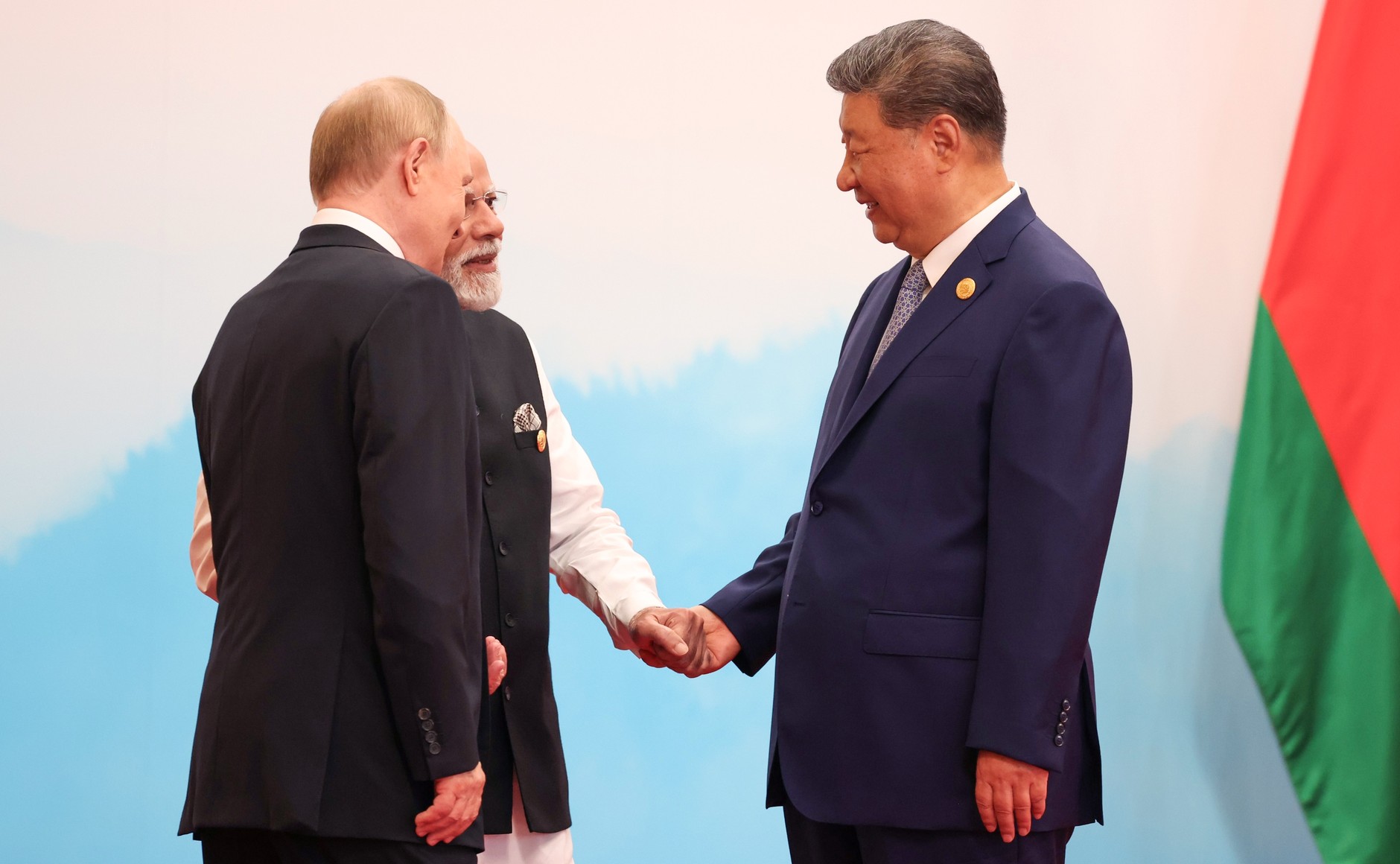
A powerful backlash against decades of American global leadership is now in full swing, spearheaded by a formidable bloc of nations including India, China, and Russia. Their collective resolve was showcased at the recent SCO summit, an event that has been described as the public announcement of a “new world order” designed to replace the current US-centric system.
The significance of this moment was not lost on observers like commentator Van Jones, who cautioned that this alliance is a “historically big deal.” The image of the leaders of these three nations standing shoulder-to-shoulder, he argued, is a clear signal of a coordinated effort to end the era of unipolarity. This is a rebellion with a clear objective: to create a more distributed and balanced global power structure.
This movement is fueled by widespread resentment of US foreign and economic policies. The American tendency to use its economic power, particularly through tariffs, as a tool of coercion has galvanized a diverse group of powerful countries against it. They are united by a common desire to operate in a world not dominated by a single nation’s interests.
For the United States, this development represents a major strategic miscalculation. The nation now finds itself “in a box,” according to Jones’s analysis, facing a united front of determined rivals. The world is shifting into a dangerous configuration where it’s “everybody against us,” a dramatic reversal of fortune for the long-reigning global superpower.