
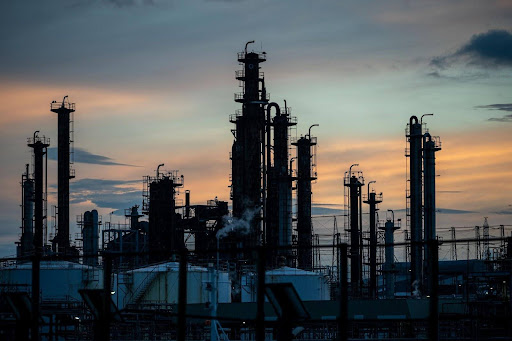
The return of triple-digit oil prices signals that the Gulf crisis has entered a new and more dangerous phase, one in which physical supply disruption has become severe enough to overwhelm the largest emergency policy interventions ever attempted. Brent crude climbed back above $100 a barrel Thursday as Iranian strikes spread across Bahrain, Iraq, Oman, and the Strait of Hormuz. The combination of a closed maritime corridor and targeted export terminals is creating supply constraints that will not be quickly resolved.
Three crew members aboard the Thai-registered Mayuree Naree were believed trapped after the vessel was struck near the Strait of Hormuz. Iraq suspended all oil exports from its ports after tanker attacks. Bahrain issued shelter-in-place orders for the Muharraq Governorate following fuel tank strikes. Oman cleared its Mina Al Fahal terminal of all vessels as a precaution.
Brent crude touched $100.29 on Thursday before settling at $98, still up around 6%. West Texas Intermediate rose 8.6% to $94.75. The Strait of Hormuz, through which roughly a fifth of global seaborne energy passes, has been closed since February 28. Saudi Aramco warned that continued disruption could have catastrophic consequences for world oil markets.
The IEA’s 32 members jointly released 400 million barrels of emergency crude, and the United States contributed an additional 172 million barrels from its Strategic Petroleum Reserve. Despite the scale of the response, prices remained elevated as new attacks continued to generate fresh supply anxiety. Iran warned of $200 oil, framing the price spike as a consequence of US foreign policy.
Goldman Sachs raised its Q4 2026 Brent forecast to $71 per barrel. Deutsche Bank cautioned of a broader stagflationary shock. Asian equities fell and European gas prices climbed 7.7%.