
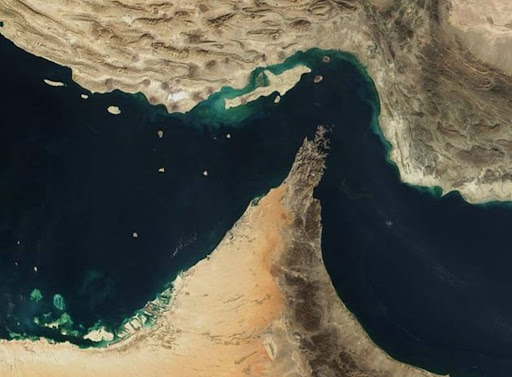
The Strait of Hormuz standoff has become a high-stakes test of resolve, with Iran betting that the international community’s military reluctance and internal divisions will allow it to maintain its blockade of the world’s most critical oil route without facing a credible naval response. President Trump has called on the UK, France, China, Japan, South Korea, and all oil-importing nations to send warships to challenge the blockade, but not a single country has committed forces. The question of who blinks first — Iran under diplomatic and economic pressure, or the global community under the economic cost of continued inaction — is becoming the defining dynamic of the crisis.
Iran launched the blockade in late February as retaliation for US-Israeli airstrikes, generating the most severe oil supply disruption in history. One-fifth of global oil exports ordinarily transit the passage. Tehran has attacked sixteen tankers and declared vessels bound for American or allied ports to be legitimate targets. The prospect of mines in the waterway adds further deterrent force to Iran’s already credible threats. By maintaining this posture, Tehran is betting that the combination of its military threats and the international community’s risk aversion will keep the strait closed long enough to achieve its strategic objectives.
The international response so far suggests Iran’s bet may be paying off. France refused to send ships while fighting continued. The UK explored lower-risk drone options. Japan described the deployment threshold as very high. South Korea pledged careful deliberation. Germany questioned the EU’s Aspides mission’s effectiveness and doubted the wisdom of expanding it. No government has committed warships. The US itself has not deployed naval escorts in the strait. Iran’s reading of Western risk tolerance appears to have been accurate — at least so far.
The economic pressure on the international community is building, however. Oil prices have surged dramatically, and economies across Asia and Europe are absorbing significant costs from the sustained disruption. For nations like South Korea and Japan, the crisis is becoming a genuine economic emergency. The longer the blockade continues without a military or diplomatic resolution, the greater the political pressure on governments to act — potentially changing the calculus that has so far led every potential coalition partner to choose caution over commitment.
China’s diplomatic engagement with Tehran represents the most plausible near-term mechanism through which Iran might agree to modify its behaviour. Beijing is reportedly in talks with Tehran about allowing tankers to pass, a process that could provide partial relief without requiring military confrontation. The Chinese embassy confirmed China’s commitment to constructive regional communication. US Energy Secretary Chris Wright expressed hope that China would prove a constructive partner. If China can bring Iran to the negotiating table on tanker passage, the question of who blinks first may be answered not by military force but by quiet diplomacy in channels far removed from Trump’s Truth Social posts.