
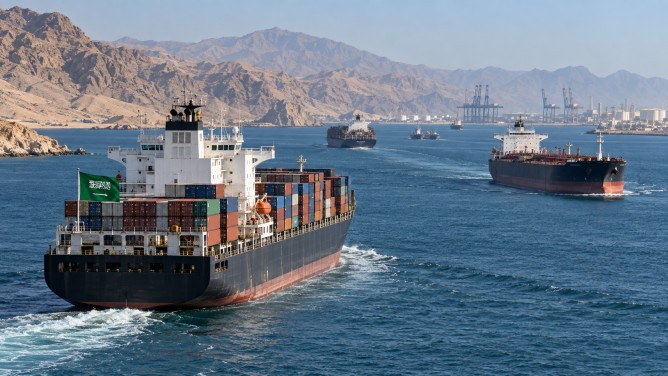
Saudi Arabia has called upon the international community to ensure the protection of key waterways in the Middle East, underscoring the critical importance these routes hold for global energy security. Saudi Foreign Minister Faisal bin Farhan emphasized this point during his address at the United Nations General Assembly, where he highlighted the need to keep the Strait of Hormuz, the Bab al-Mandab Strait, the Red Sea, and the Gulf of Aden open to international shipping.
Bin Farhan specifically urged for the Strait of Hormuz to revert to pre-February 28 conditions, advocating against the imposition of additional fees or taxes on vessels navigating this vital passage. He strongly opposed the use of these strategic waterways as leverage for political pressure or threats, reinforcing the importance of safeguarding maritime navigation in accordance with international laws and United Nations resolutions.
The Strait of Hormuz and Bab al-Mandab are pivotal corridors for oil and gas shipments worldwide. Any disruptions in these waterways have the potential to significantly impact energy supplies and international shipping operations. Saudi Arabia’s stance highlights the broader geopolitical tensions involving Iran, the United States, and Israel, along with maritime disruptions linked to the Iran-backed Houthi movement in the Red Sea area.
The kingdom’s appeal comes amid ongoing regional tensions and serves as a reminder of the interconnectedness of global energy supply chains and the pivotal role of Middle Eastern waterways in maintaining their stability.