
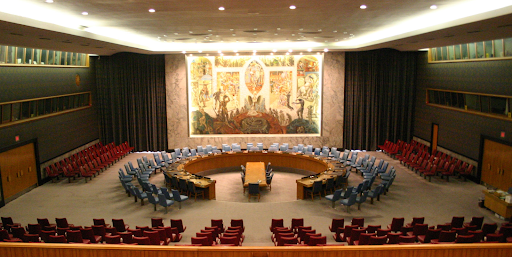
In a rare alignment of positions, both the Israeli government and Hamas have found common ground in their rejection of the new UN resolution on Gaza. The resolution, which was adopted on Monday following intense US lobbying, attempts to impose a solution based on President Trump’s 20-point plan. However, the document is riddled with contradictions that have alienated both sides. It offers a conditional “pathway to statehood” to appease Palestinians, which Israel rejects, and mandates an “International Stabilization Force” to disarm the strip, which Hamas rejects. This dual refusal suggests that the plan is disconnected from the political and military realities on the ground.
The promise of statehood was the diplomatic engine that drove the resolution through the Security Council. It was the concession necessary to win the support of the Palestinian Authority and to prevent Russia from exercising its veto power. Yet, this political horizon was immediately clouded by Prime Minister Benjamin Netanyahu. In a public statement following the vote, Netanyahu rebuked the resolution’s premise, reiterating his unyielding opposition to the establishment of a Palestinian state. Without Israel’s cooperation, the “pathway” envisioned by the UN is effectively blocked, rendering the political incentive meaningless.
On the other side of the conflict, the security provisions have triggered a defiant response from Gaza’s militant rulers. The resolution authorizes an international force to destroy tunnels, seize rockets, and decommission all weapons. Hamas viewed this mandate as a direct threat to its existence, labeling the plan “international guardianship.” In a stark warning to the international community, the group stated it “will not disarm,” ensuring that any force deployed to Gaza will face an active and hostile enemy. This rejection undermines the core security premise of the resolution, which relies on demilitarization to restore stability.
Despite the plan being rejected by the two entities that matter most, the US delegation celebrated the vote as a triumph. Ambassador Mike Waltz described the resolution as the necessary step to “dismantle Hamas’ grip” and create a “prosperous and secure” environment for civilians. President Trump, who is set to chair a “Board of Peace” for reconstruction, hailed the moment as “historic.” The US narrative focuses on the passage of the document as a victory in itself, glossing over the immense difficulties of implementing a plan that has no consent from the parties involved.
The fragility of the resolution was further highlighted by the abstentions of Russia and China. These global powers refused to vote in favor, protesting the US-centric nature of the plan and the lack of a genuine UN role. Russian Ambassador Vasily Nebenzya warned that the Security Council was ceding “complete control” to Washington, a move that dilutes the international legitimacy of the mission. With no unified council support and total rejection from the combatants, the resolution appears to be a diplomatic construct with little hope of practical application.