
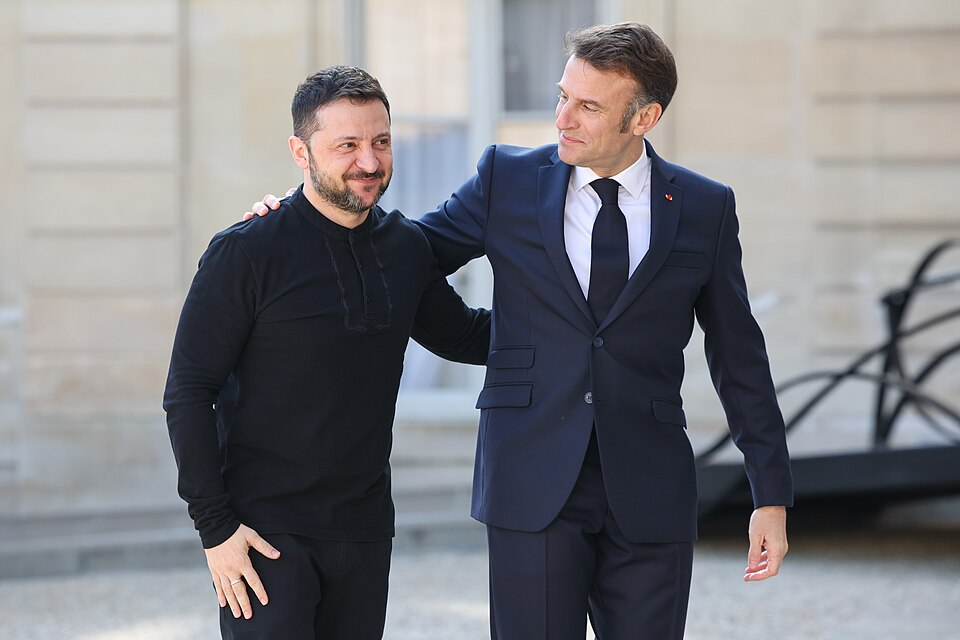
Ukraine’s “historical” 10-year agreement with France signals a profound shift from a simple customer-supplier relationship to a deep industrial partnership. While the preliminary deal for 100 Rafale jets has captured headlines, a strategically crucial component of the pact is the agreement for joint industrial projects, including the co-production of interceptor drones. This was announced by President Zelensky in Paris and marks a major step toward Ukrainian defense sovereignty.
This agreement to co-develop and manufacture new drone technology is a massive victory for Kyiv. It will transfer vital French technology and manufacturing expertise, allowing Ukraine to build up its own defense industrial base. As the war enters its fourth year, this capability is just as important as acquiring foreign hardware, as it provides long-term self-sufficiency.
This industrial cooperation is embedded within a comprehensive security package. The letter of intent also includes the 100 Dassault-made Rafales and eight “world-class” SAMP/T air defense systems. This combination of “buying” high-end systems and “building” next-generation ones gives Ukraine a powerful, hybrid modernization strategy.
The need for all these tools is driven by Russia’s relentless air war, which has seen missiles and glide bombs devastate Ukrainian cities. The new co-produced interceptor drones will be a tailor-made solution to counter Russia’s own drone and missile attacks, working alongside the SAMP/T and Rafale systems.
This deep partnership is being forged as US aid has been halted, forcing Ukraine to pivot to Europe. The financing for the 10-year pact reflects this, with funding from the EU’s SAFE fund and a G7 plan to use frozen Russian assets. This deal is about more than jets; it’s about building Ukraine’s future.