
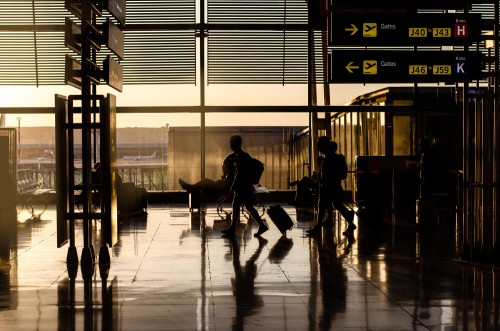
Saudi airports experienced a significant surge in passenger traffic in 2025, with a 9.6 percent increase bringing the total to 140.9 million travelers, as reported by the General Authority for Statistics. International travelers accounted for 75.8 million of this figure, marking a 9.4 percent rise from the previous year, while domestic passengers totaled 65.1 million, reflecting a 9.8 percent increase. This growth aligns with Saudi Arabia’s Vision 2030 initiative, which aims to position the country as a leading aviation and tourism hub. The Kingdom has already surpassed its initial target of 100 million tourists annually and has now set a new goal of 150 million by 2030.
The aviation sector’s expansion occurred despite regional disruptions due to the ongoing Iran conflict, which led to airspace closures and flight cancellations in parts of the Middle East. Between February 18 and March 28, during the period from Ramadan 1 to Shawwal 9, Saudi airports managed to handle over 12.1 million passengers. King Abdulaziz International Airport emerged as the busiest, with 53.5 million passengers, an increase of 9 percent from 2024, followed by King Khalid International Airport in Riyadh with 40.8 million passengers, and King Fahd International Airport in Dammam with 13.7 million passengers.
Abdulaziz Al-Duailej, President of the General Authority of Civil Aviation, highlighted the resilience of Saudi Arabia’s aviation sector during global operational challenges, emphasizing the importance of contingency planning and expanded airport capacity. He noted that from February 28 to May 3, the Kingdom accommodated more than 2,000 flights from neighboring countries, carrying over 258,000 passengers while maintaining smooth air traffic flow. In 2025, the Kingdom processed an average of 178,600 domestic and 207,700 international passengers daily.
The total number of flights, both arriving and departing, reached 979,800 in 2025, indicating an 8.3 percent increase compared to the previous year. Domestic flights accounted for 506,300, a 6.8 percent rise, while international flights totaled 473,500, up 9.9 percent. King Abdulaziz International Airport handled the highest number of flights, at 314,400, followed closely by King Khalid International Airport with 296,800, and King Fahd International Airport with 108,500. The Kingdom’s aircraft fleet expanded significantly, growing by 33.8 percent to a total of 483 aircraft.
Air cargo operations also saw growth, with volumes reaching 1.18 million tonnes in 2025. Inbound cargo led at 695,600 tonnes, followed by transit cargo at 420,100 tonnes, and outbound cargo at 69,700 tonnes. The number of countries connected through Saudi international airports increased to 66, and the number of destinations reached 176, a 2.3 percent increase from the previous year. Saudi Arabia ranked 18th in the Global Air Connectivity Index 2025, slightly down from the 17th position in 2024. In terms of airspace utilization, Saudia was the leading airline, followed by flynas and flyadeal.