
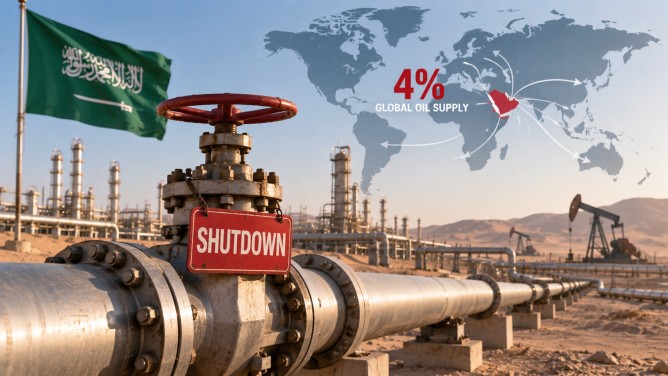
Saudi Arabia’s temporary closure of its crucial East-West oil pipeline following an attack has heightened concerns about global crude supply disruptions. This move comes as Iran-backed Houthi forces continue to expand their influence along Yemen’s Red Sea coast, threatening to further unsettle regional oil shipments. The Houthis have gained significant ground near the Bab el-Mandeb Strait, a vital maritime passage linking the Red Sea and the Gulf of Aden, amplifying fears over the security of oil transportation in the area.
On September 12, Saudi Arabia halted operations of its 1,200-kilometer East-West pipeline as a precautionary response to an attack that occurred the previous day. This pipeline is a strategic asset for the kingdom, allowing for the transfer of crude from its eastern oil-producing regions to the Red Sea. This route serves as an alternative pathway for exports, particularly when the Strait of Hormuz faces disruptions. Following severe disruptions in the Strait of Hormuz amid the US-Iran conflict, Saudi Arabia had increased its oil exports through Red Sea facilities. The recent attack could strain the kingdom’s ability to maintain its crude flow to international markets.
Market analysts warn that a prolonged shutdown of this pipeline could significantly impact global oil availability. The potential disruption comes at a critical time, as Brent crude prices have already surged past $100 a barrel due to rising tensions in the Middle East. The situation could have broader implications if both the Strait of Hormuz and the Bab el-Mandeb Strait remain compromised. Restrictions on these essential shipping routes could affect global energy supplies, elevate transportation costs, and drive crude prices even higher.
The ripple effects of increased oil prices could be felt across major economies, spurring inflation by raising fuel, transportation, and production costs. Countries heavily dependent on energy imports may face additional economic pressures, affecting their trade balances and currencies. The duration of Saudi Arabia’s pipeline shutdown and the evolving security dynamics around the Red Sea and Strait of Hormuz will be pivotal in assessing the impact on global oil supplies and energy markets.