
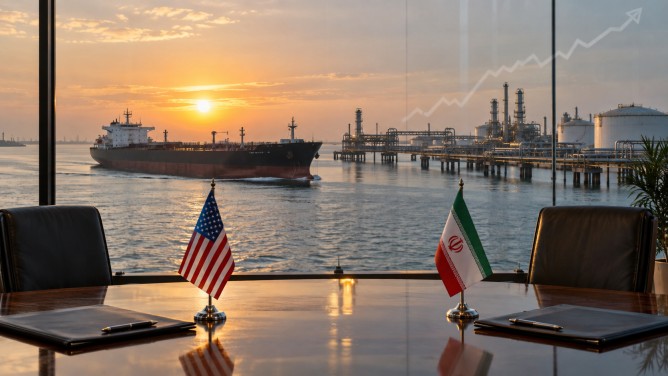
Oil prices experienced an uptick on Tuesday after four days of declines, driven by anticipation of possible diplomatic talks between the United States and Iran at the United Nations General Assembly in New York. Brent crude futures for November rose by 1.7% to approximately $102 per barrel, while October’s US West Texas Intermediate (WTI) crude also climbed 1.7%, nearing $97 per barrel.
The market’s focus is on a potential meeting between US President Donald Trump and Iranian President Masoud Pezeshkian, who is expected to attend the UN event. The prospect of easing tensions between Washington and Tehran has sparked interest among investors, influencing oil price fluctuations.
Adding to the complexity of the situation, ongoing tensions in the Middle East have continued to support higher oil prices. Although Saudi Arabia has managed to increase crude exports through the Strait of Hormuz following disruptions in its East-West pipeline, regional instability remains a concern. In response to growing tensions, China has urged Iran to help curb attacks by Yemen’s Houthi group, which has been aligned with Tehran and has contributed to the uncertainty in the area.
Further complicating the global oil supply, Libya has faced production challenges as an armed group reportedly shut a valve on the Sharara crude pipeline. This action has led to a reduction in output from one of the country’s major oilfields, with production dropping by about 200,000 barrels per day.