
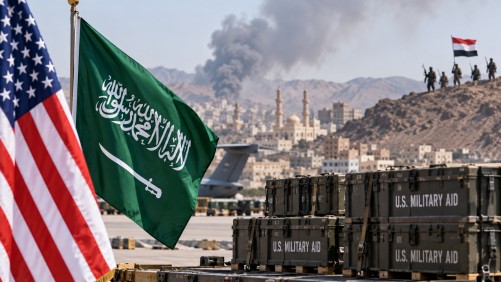
The United States has opted not to extend direct military aid to Saudi Arabia amid escalating tensions along Yemen’s western coast, where Houthi forces continue to gain ground. This decision follows recent discussions between US officials and Houthi representatives in Oman, where the Houthis assured that the existing 2025 ceasefire agreement remains active and stressed their lack of intent to target American or international shipping in the Red Sea.
Despite these assurances, the Houthis indicated that Saudi-linked vessels might still be considered targets due to Riyadh’s involvement in the Yemen conflict. The advancement of Houthi forces in western Yemen has raised alarms over the security of shipping through the Bab al-Mandab Strait, a crucial global trade passage connecting the Red Sea with the Gulf of Aden.
The ongoing dialogue between Washington and the Houthis underscores a strategic shift as the US refrains from engaging militarily on behalf of Saudi Arabia. This stance places increased pressure on Riyadh to seek alternative solutions, such as negotiations with the Houthis or rallying greater regional support to address the situation.
Compounding the situation, Saudi Arabia has expressed concerns following an alleged Houthi drone attack near Mecca. According to Saudi authorities, the drone was intercepted before it could breach restricted airspace, although Houthi officials have denied any responsibility for the attempt on the holy city.
The recent developments have intensified worries over the security of maritime routes in the Red Sea and the broader implications for regional stability and international commerce. As the conflict in Yemen persists, the strategic decisions of involved parties continue to shape the geopolitical landscape of the Middle East.