
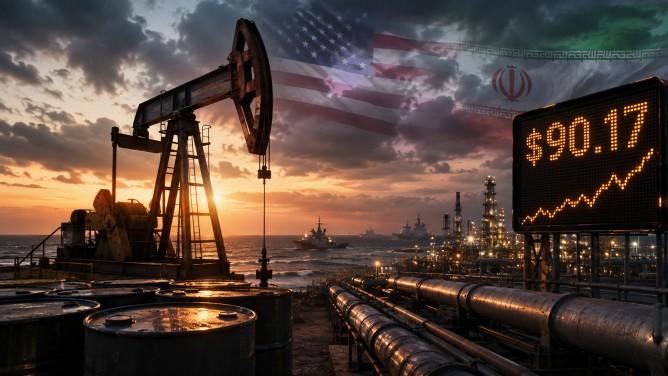
Oil prices experienced a significant surge following the expiration of a two-month negotiation period between the United States and Iran, which ended without reaching a peace agreement. This development has heightened concerns over the potential continuation of the conflict and its impact on global energy supplies. Brent crude surpassed the $90 mark, reaching approximately $91.63 per barrel, marking its highest level since July 30. The rise in oil prices was further fueled by US President Donald Trump’s demand for Iran’s surrender and his warning of possible conflict escalation if diplomatic solutions remain out of reach.
The strategic Strait of Hormuz, a vital artery for global oil shipments, has become a focal point of concern as the number of commercial vessels traversing this passage has significantly decreased. This situation has intensified fears of prolonged disruptions to oil supplies. The tension in the region has been exacerbated by reports of a cargo vessel attack in the strait, raising alarm over the safety of maritime activities there.
In response to the failed negotiations, Iran has signaled the possibility of adopting a more aggressive military approach. This stance, coupled with the precarious situation in the Strait of Hormuz, has prompted investors to brace for a potentially extended period of supply disruptions. Should the strait face a prolonged closure or reduced traffic, it could exert additional upward pressure on crude prices.
Analysts caution that the ongoing conflict in the Middle East, alongside the continuing war in Ukraine, poses a risk of further shocks to global energy markets. This scenario could result in even higher oil and gas prices, compounding the challenges faced by economies worldwide. The intersection of these geopolitical tensions underscores the fragile nature of global energy security and the potential for significant economic repercussions.